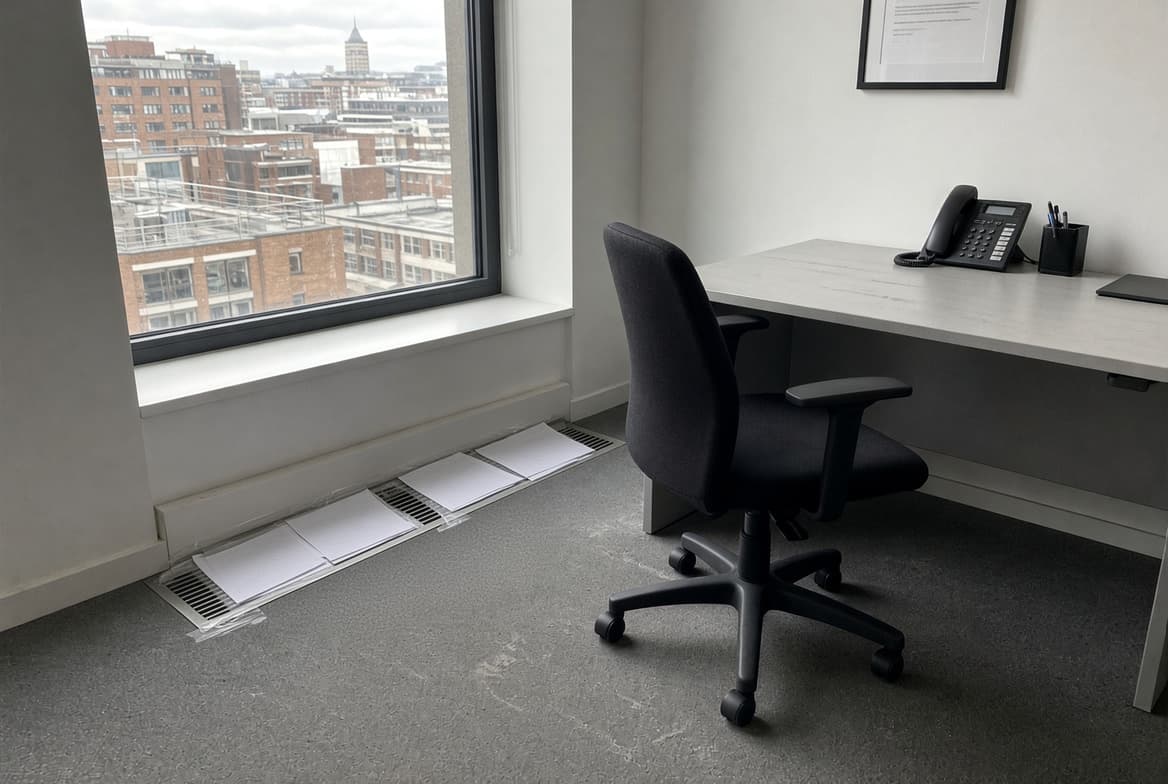
Why would someone cover an air vent?
Cold air blowing directly from the floor vents made the workstation uncomfortable. The person's solution was simple: cover the vents with paper.

Human-centred building performance
Entelligently learns from how people experience a building, combines that insight with environmental and building data, and helps owners and managers understand and improve building performance.
The design–performance gap
Cold air blowing directly from the floor vents made the workstation uncomfortable. The person's solution was simple: cover the vents with paper.
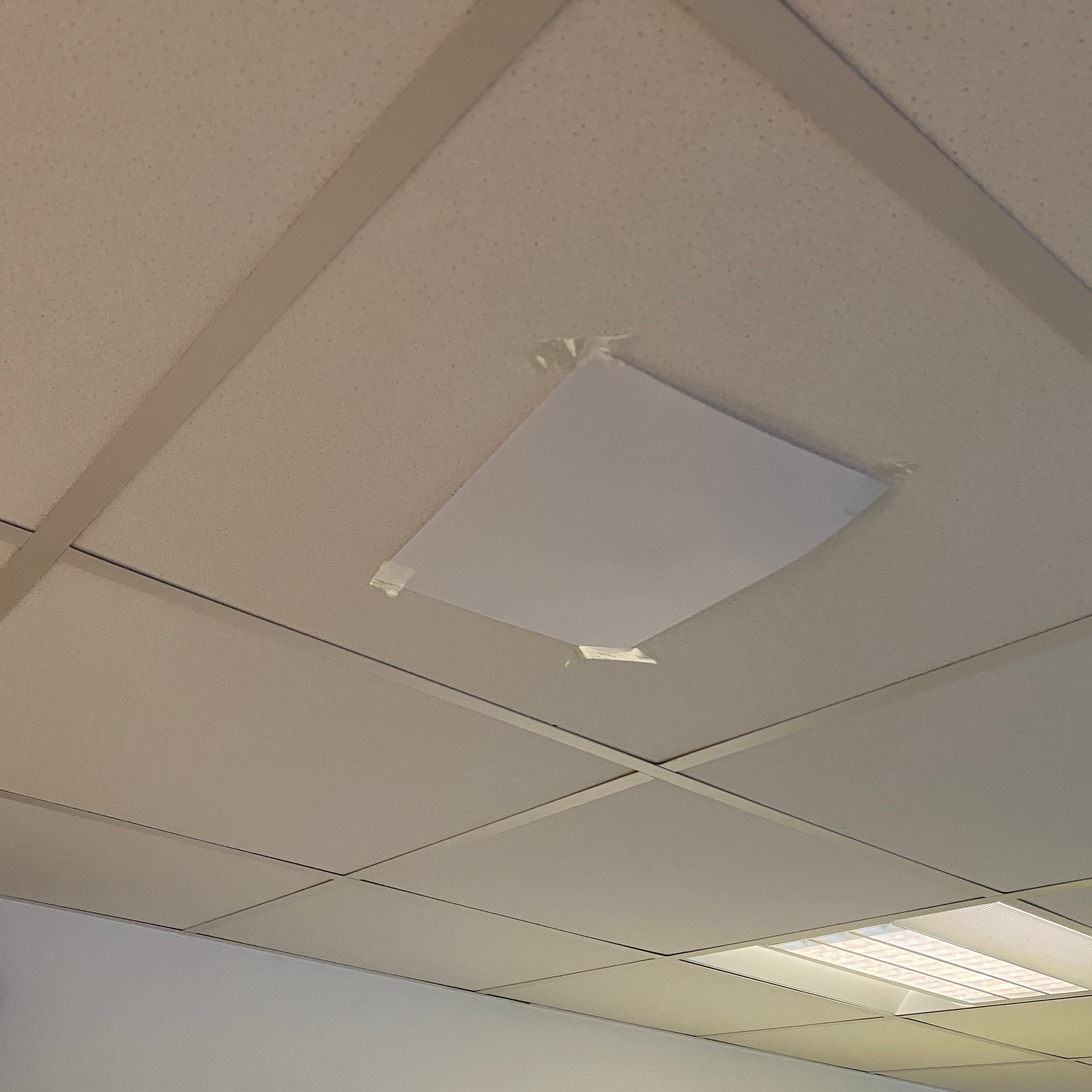
When lighting controls don't recognise that someone is still working, people find their own solution. Covering the sensor stops the lights repeatedly switching off.
People adapt buildings when the environment is not working for them. Those small interventions can affect other people, change energy use and remain invisible to the people managing the building.
Entelligently helps make that invisible feedback visible.
Building systems can tell owners and managers a great deal about temperature, air quality, energy use and equipment operation.
But those systems do not necessarily tell them how those conditions are being experienced by the people inside the building.
The missing information is the human context: who is affected, where they are affected and how they respond.
Entelligently connects people's experience with available environmental and building-system information to support better-informed decisions.
HUMAN-CENTRED BUILDING INTELLIGENCE
Temperature, humidity, CO₂ and other environmental data can tell you a great deal about a workspace. But they cannot tell you whether the person sitting there actually feels comfortable.
Entelligently combines people's experience with available environmental and building information, creating context that either source alone cannot provide.
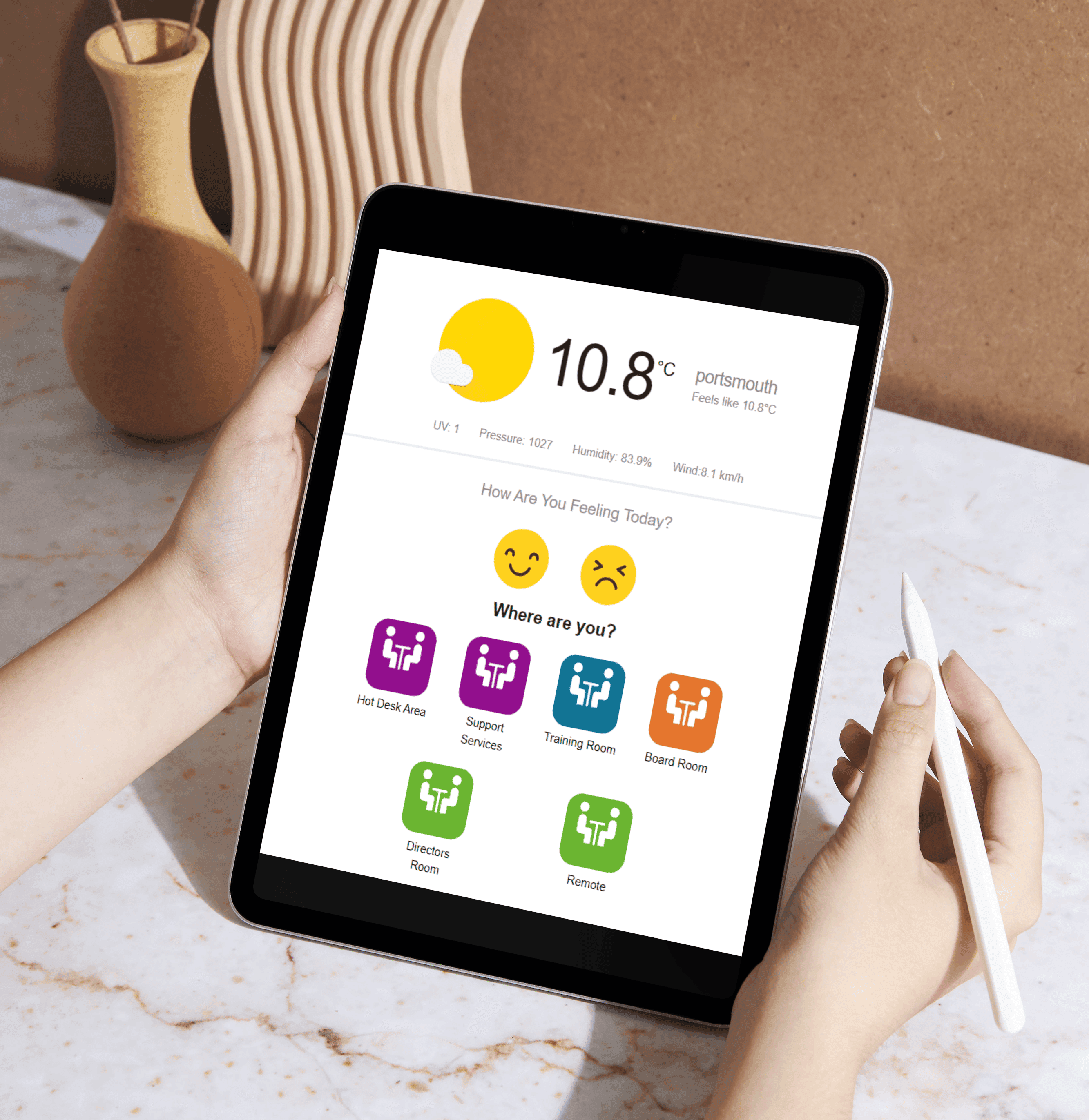
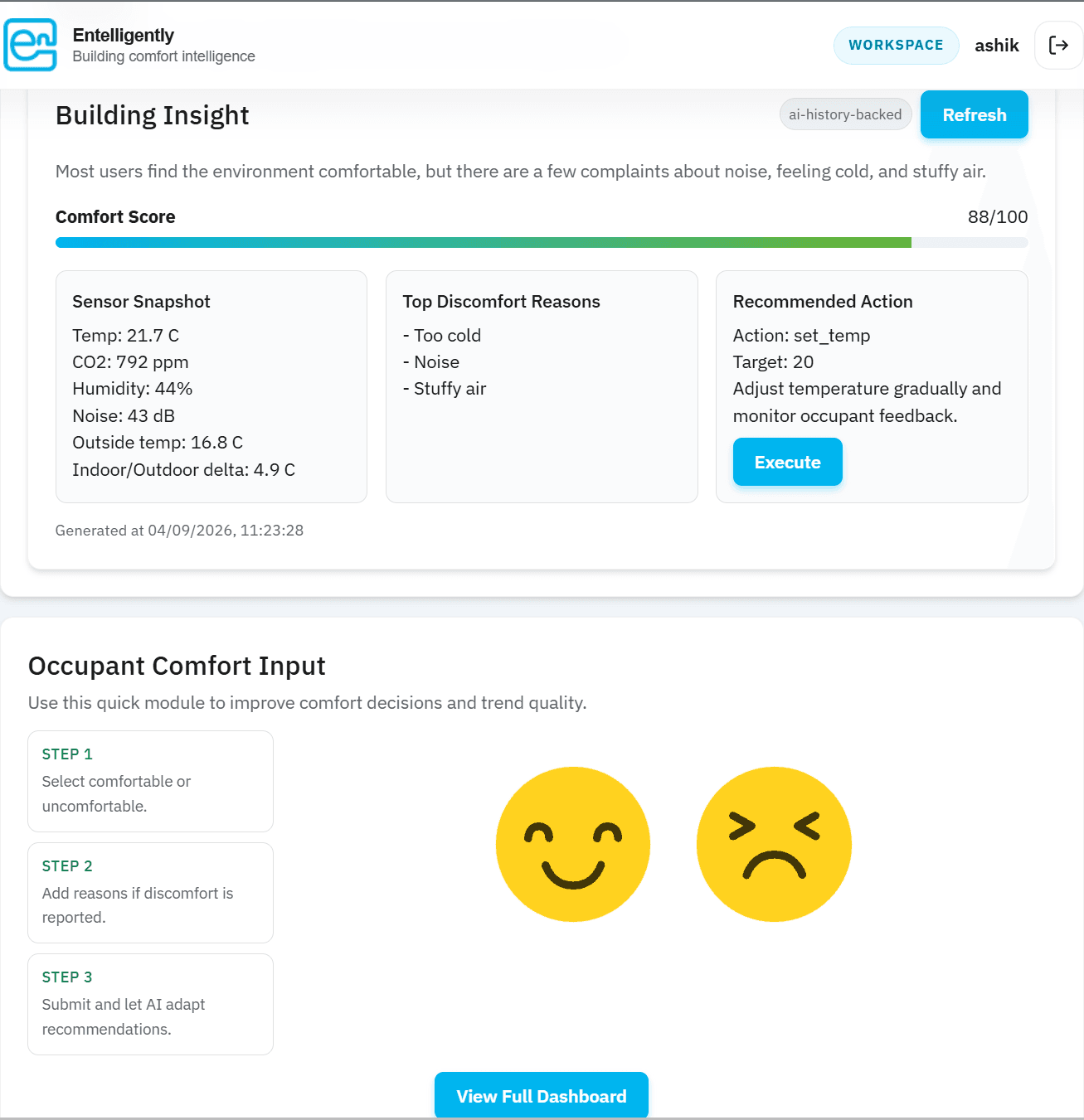
People can quickly tell Entelligently whether they are comfortable and, where appropriate, why they are uncomfortable.
Entelligently can combine that human feedback with available environmental, weather and building-system information.
Together, those signals provide a richer picture of where comfort issues are occurring and what may be contributing to them.
FROM INSIGHT TO ACTION
Not every comfort issue needs a building manager or a change to the building itself. Sometimes the person experiencing the problem can resolve it with a simple action.
Entelligently can provide a Smart Nudge — or Snudge — suggesting a simple action the person can take themselves.
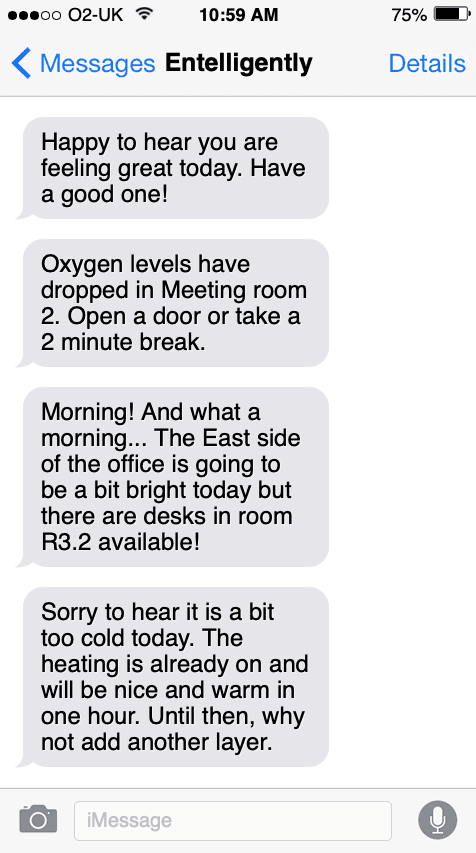
Entelligently identifies a potential comfort issue.
Snudge
A relevant prompt suggests something the person can try.
The person can take an appropriate action themselves.
If comfort improves, no building-manager intervention is needed.
WHEN MORE IS NEEDED
Some issues need more than a simple change by the person experiencing them.
Where building-system information is available, Entelligently can use it to understand what else may be contributing to the problem and help identify an appropriate next step.
The response can remain proportionate to the problem: start with the person, use the available building information, and involve the building manager when needed.
The person's comfort issue has not been resolved by the simple intervention.
Entelligently can use available environmental and building-system information to understand what else may be contributing.
Entelligently can support an appropriate response, from recommending an action to involving the building manager when needed.
GROW WITH YOUR BUILDING
Entelligently does not require a building to start again with a completely new technology stack.
You can begin with the information and systems already available, then add more context and capability over time.
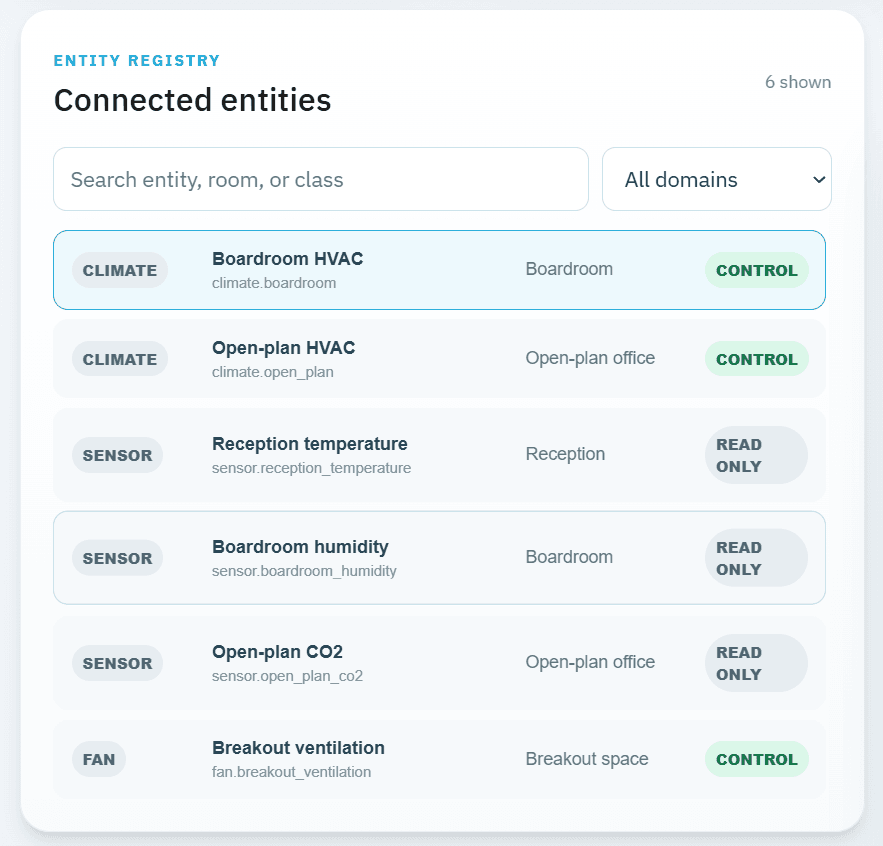
People provide comfort feedback.
Environmental sensors add more context about the conditions around them.
Available building-management systems add operational information and can support further response.
The spatial digital twin connects people, sensors, systems and issues to the places where they are actually happening.
Start anywhere. Add intelligence as you go.
SPATIAL UNDERSTANDING
Building information becomes much more useful when you can understand where things are happening.
Entelligently's spatial digital twin connects people, sensors, building systems and issues to the physical spaces they relate to.
This helps building managers see information in context, understand where issues are occurring and focus attention on the places that need it.
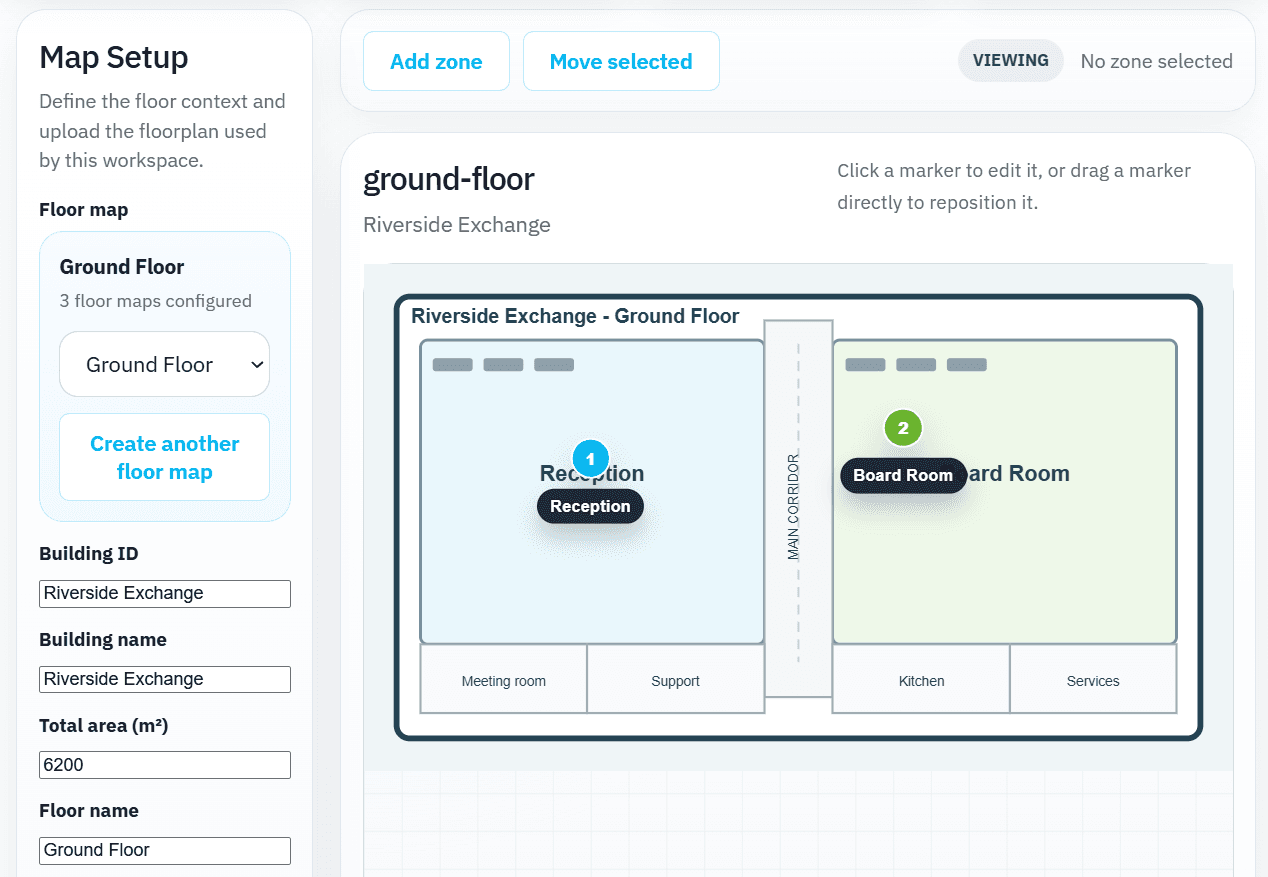
See where comfort, environmental or operational issues are occurring.
Bring people, sensors and building information together in the context of a real place.
Use spatial context to help identify where investigation or action may be needed.
BETTER BUILDING PERFORMANCE
Entelligently brings together how people experience a building with environmental conditions, building information and place, helping owners and managers make better-informed decisions.
The objective is not to collect more data for its own sake. It is to understand what is happening, how it is affecting people and where attention or action may be needed.
Understand how people actually experience the spaces they use, rather than relying on environmental measurements alone.
Give owners and managers greater context for understanding issues and deciding where attention or action may be needed.
Help better align the way a building operates with the needs of the people using it, including identifying opportunities to avoid unnecessary energy use.
REAL-WORLD EVIDENCE
Entelligently was trialled with BDP Architects at the Bright Building in Manchester, exploring how people's comfort feedback could be combined with environmental and building information to create more responsive building insight.
The trial showed how people's comfort feedback could be considered alongside environmental conditions to reveal differences between spaces and individuals, providing greater context about where and why discomfort was occurring. In one zone, comfortable responses increased from 34% to 47% month-on-month.
In all three instances examined, Snudges were followed by increased engagement the next day. More comfortable responses were also recorded in the week when Snudges recommended actions than in the comparison week when they simply requested feedback.
INSIGHTS
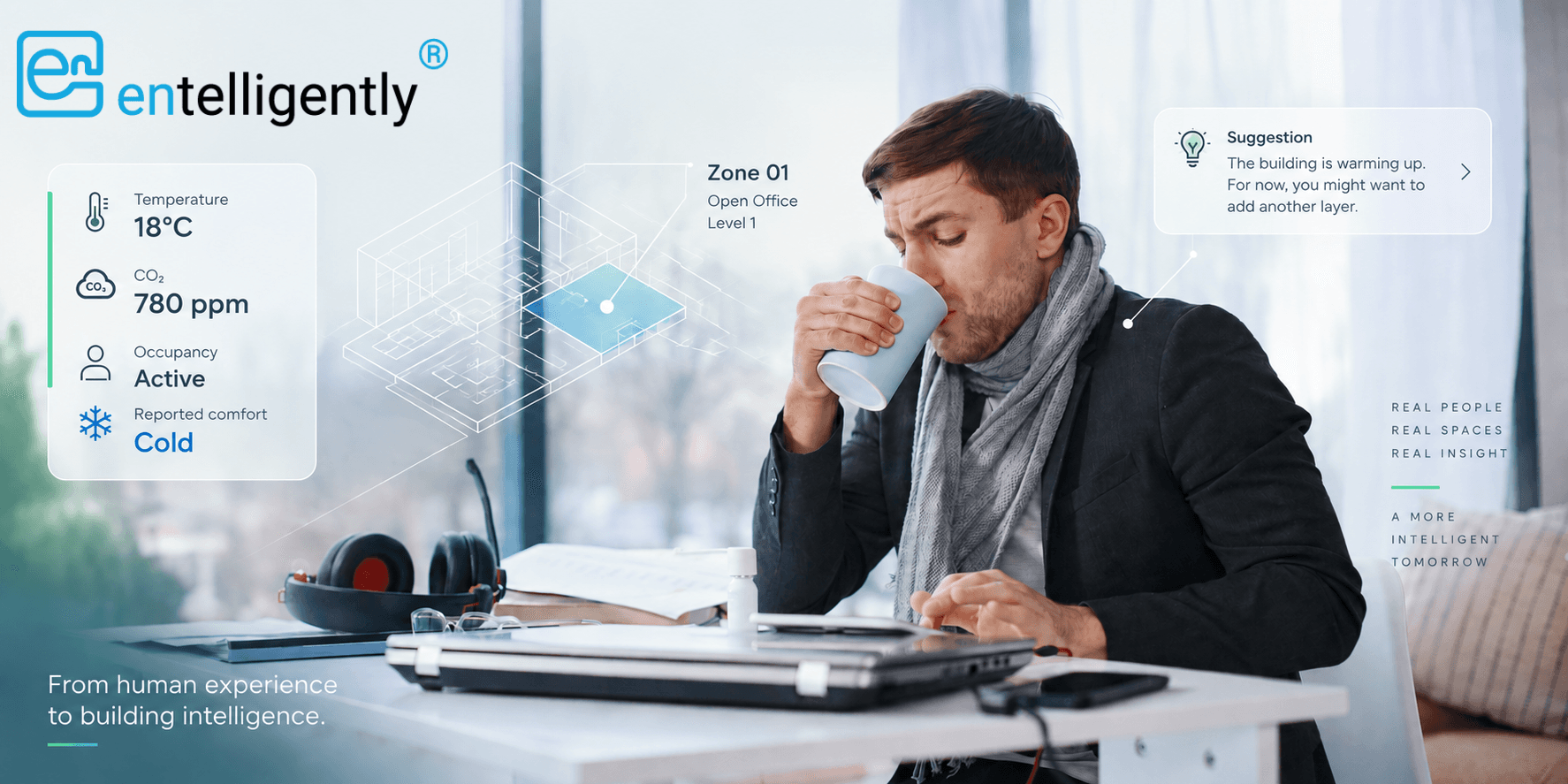
Entelligently V2 brings together how people experience a building with environmental data, connected building systems and spatial digital-twin information. The result is a richer understanding of how buildings are really performing — and a practical route from insight to action. We are now looking for organisations to explore that potential with us as trial partners.
Read insight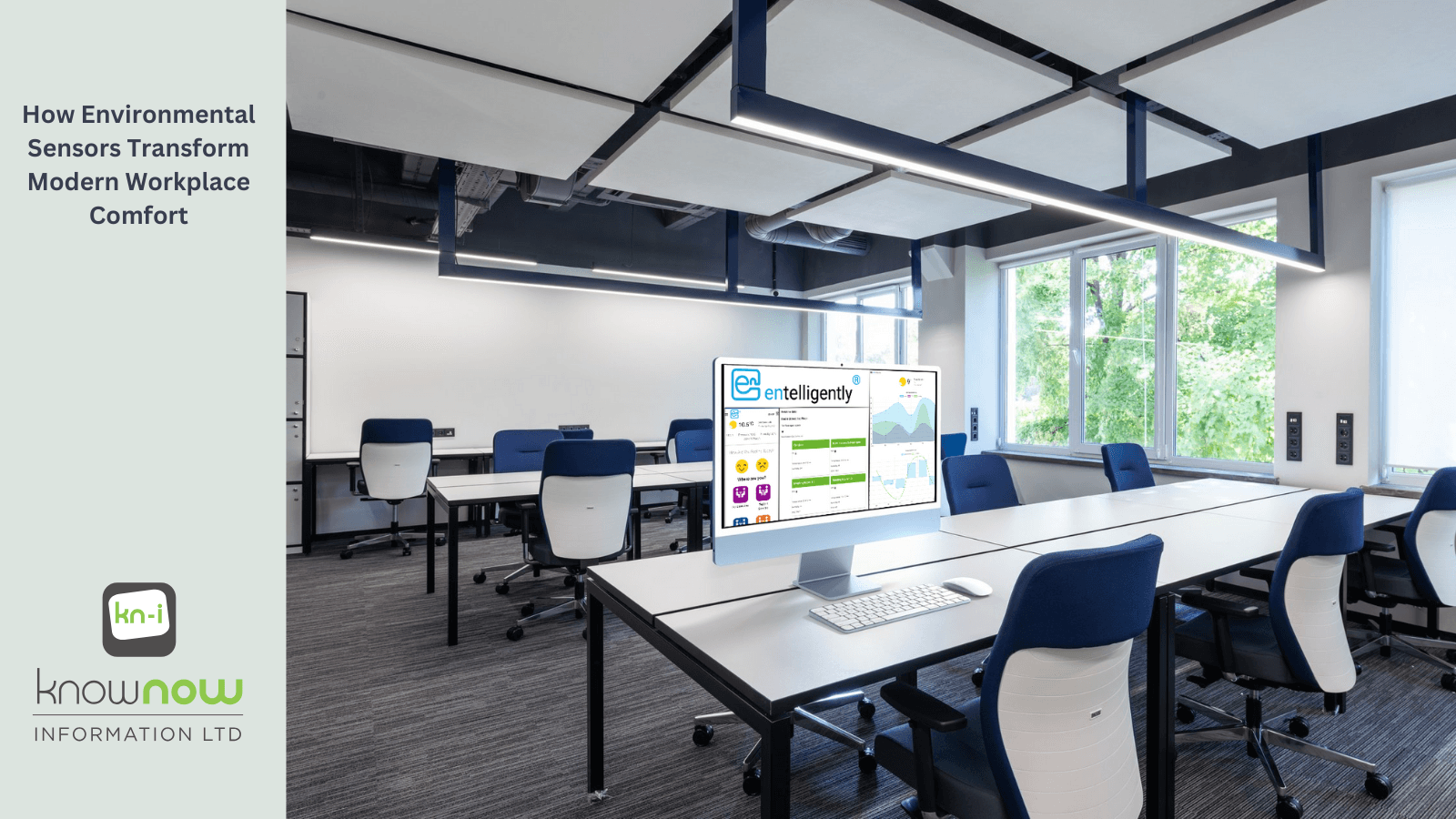
How environmental sensors can provide building context for workplace comfort, air quality and productivity.
Read insight
How smart building data, sensors and user feedback can help people understand workplace comfort and productivity.
Read insightSTART A CONVERSATION
See how Entelligently could bring together people, environmental data and building information to help you understand your building differently.
Request a demo